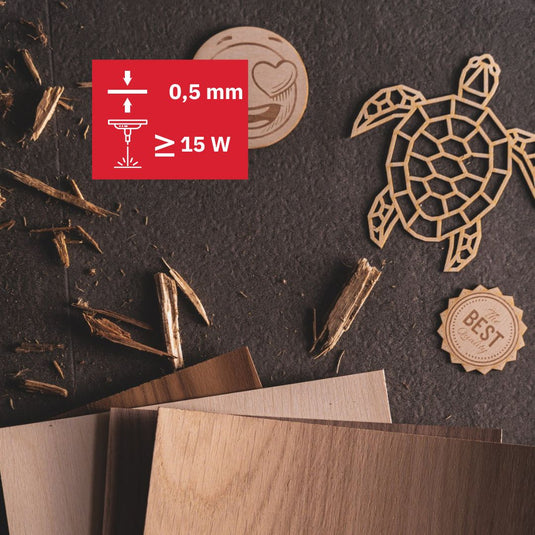

"What makes good laser wood?" – What to look for in wood for the laser
What Makes Good Laser Wood?
Not every wood is equally suitable for laser processing. The quality of the material affects the cut appearance, engraving result, and ultimately the success of your project. In this article, we explain what to look for in wood for laser work—so your projects turn out clean, precise, and aesthetically pleasing.
1. Uniform Grain and Wood Quality
Good laser wood has a consistent grain and a homogeneous structure. This ensures even engravings and precise cuts. Lively grains or knots can also give your project a unique character.
2. High-Quality Gluing in Plywood
Plywood consists of several layers of wood glued together. For laser processing, high-quality, laser-compatible gluing is crucial because low-quality adhesives can cause unpleasant odors during laser cutting or result in uneven cut edges.
3. Optimal Moisture
Wood that is too moist tends to swell and warp during laser cutting. Therefore, the material should be well dried and stored to ensure precise cuts and clean engravings.
4. Smooth Surface for Best Results
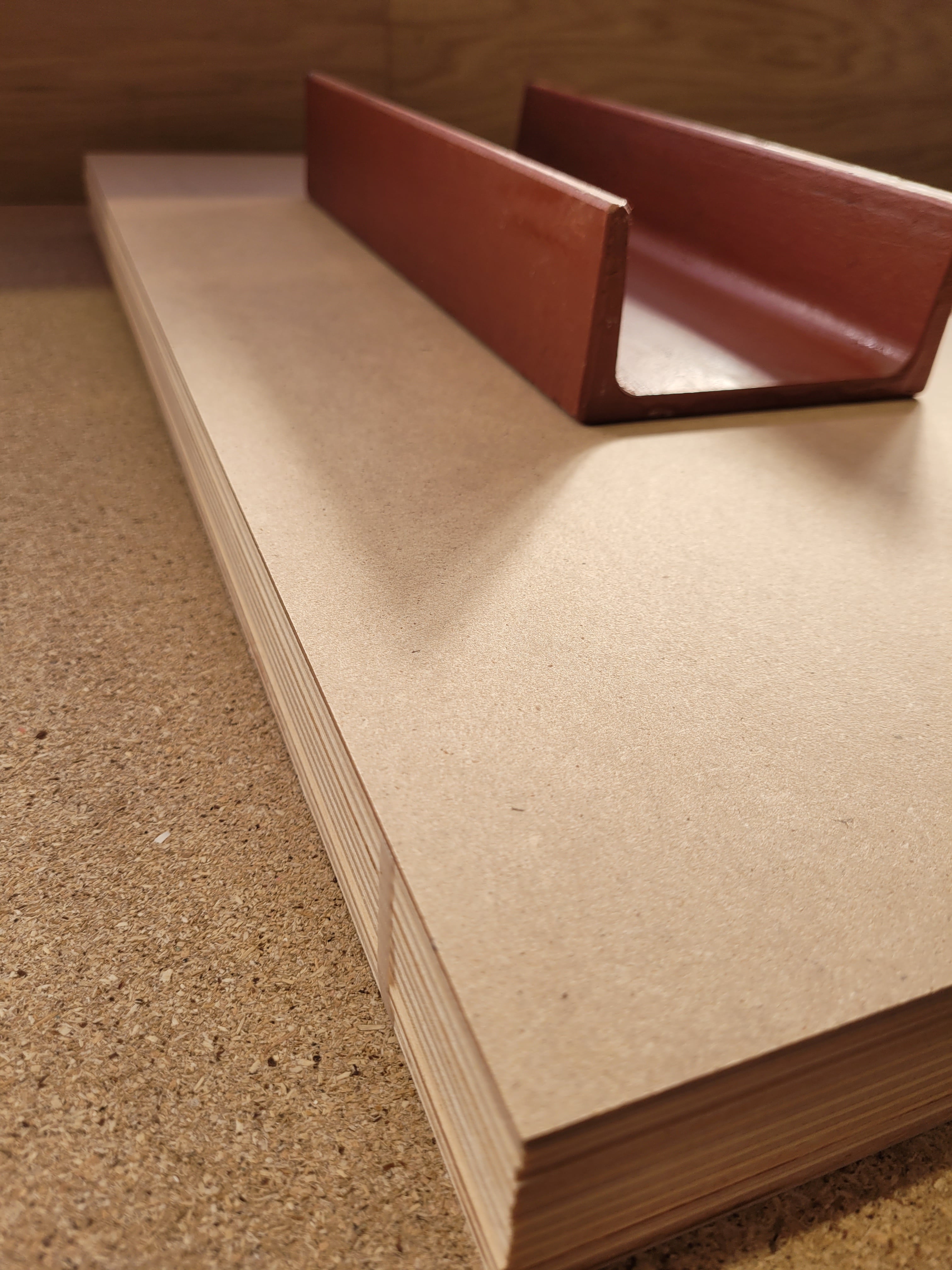
A finely sanded surface ensures that engravings appear clear and clean. Some wood panels, such as Smoothy Ply, offer especially smooth surfaces ideal for fine details.
5. Consistent Panel Thickness
Especially with plywood and HDF, consistent panel thickness is important. Variations can lead to uneven engraving depth and problems during laser cutting.
6. Free from Harmful Substances
Since substances evaporate during laser cutting, it is important that the wood is free from harmful varnishes, paints, or chemicals. This way, you can avoid health-damaging fumes and protect your laser device.
7. Laser-Optimized Core Layers and Veneers
For veneered panels, the combination of a stable core layer and a refined surface is key. Laser-optimized core layers ensure good workability, while the veneer meets aesthetic demands.