
Wooden Cake Topper – Which Material Is Suitable and What Should You Pay Attention To?
Wood cake toppers – which material is suitable and what should you watch out for?
Wood cake toppers are more than just a trend. They add a personal and high-quality touch to weddings, birthdays, baptisms, or corporate events. But for a cake topper to not only look good but also be stable, cleanly processed, and safe to use, material choice and design play a crucial role.
In this article, we show which types of wood are suitable and what to consider regarding design, processing, and hygiene.
🌲 Choosing the right material
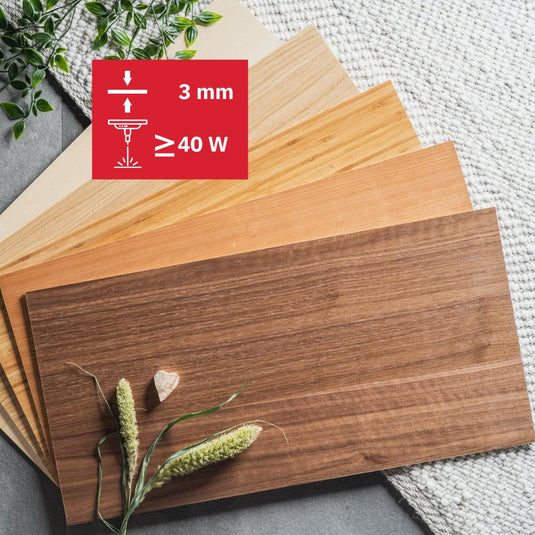
Precious HDF – precise, versatile, and high-quality
Precious HDF (high-density fiberboard) is especially popular for laser-cut cake toppers. The material is characterized by a very fine, homogeneous structure and allows clean, precise cut edges – even with detailed lettering.
Another advantage is the wide selection of different wood looks and variants. This allows the cake topper to be perfectly adapted to the style and color concept of the event – from modern to rustic to elegant.
Advantages of Precious HDF:
-
even surface
-
high level of detail
-
stable, clean cut edges
-
varied wood looks

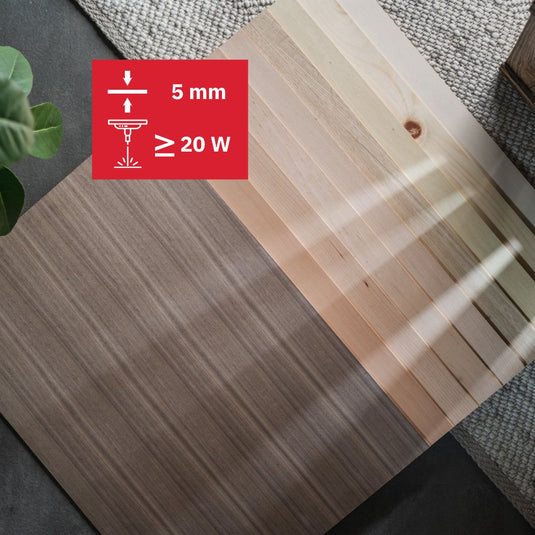
Alternatives: Poplar plywood & Smoothy Ply
Besides Precious HDF, other types of wood are also suitable:
-
very light
-
natural wood look
-
well suited for larger toppers
-
especially smooth surface
-
ideal for engravings or painted designs
-
even top layers
Regardless of the material, it is important to use warp-resistant panels whenever possible. Especially with thin material thicknesses, wood can easily warp due to moisture or temperature changes. High-quality pressed, straight panels ensure a clean final result.
✏️ Design: Stability over excessive delicacy
Delicate designs look elegant – but can be fragile. Too thin connection points or extremely narrow lines significantly increase the risk of breakage.
What to watch out for:
-
no too narrow bridges between letters
-
do not make lines too thin
-
leave inner areas stable
-
check that no important elements are accidentally removed during cutting
A slightly bolder designed lettering still looks delicate but is much more stable.

🔥 Test laser settings
Every laser reacts differently to wood types and material thicknesses. A test cut helps find optimal settings and reduce scorch marks. This achieves clean, even edges and minimizes rework.
🧼 Carefully finish edges
After laser cutting, light scorch marks or fine wood residues often appear on the cut edges. These should definitely be removed.
Suitable for finishing:
-
fine sandpaper
-
a fine file
-
a soft cloth with some isopropanol
Isopropanol helps gently remove light scorch marks. It’s important to use only a small amount of liquid so the wood doesn’t get soaked. Afterwards, the topper should dry completely.
A clean finish not only ensures a high-quality look but also a pleasant feel.
🍰 Hygiene when used in cake
Even if the cake topper is only inserted into the cake by the stick, this area should be protected.
Recommendation:
Wrap the insertion area with cling film. This prevents scorch marks from coming into direct contact with the cake.
We ensure that the wood and glue in our Precious HDF are safe. If there are any uncertainties regarding the material or use, it’s always best to ask – especially for products that come into contact with food.

✨ Conclusion
For high-quality cake toppers, Precious HDF, poplar plywood, or Smoothy Ply are suitable – the key factors are material quality, warp-resistant boards, and a well-thought-out design. With clean finishing and simple hygiene protection, a stable, aesthetic, and safe cake decoration is created.
With a bit of planning, a piece of wood becomes a durable, personal highlight at any celebration.